はじめに
2025年秋以降、私はJSONを活用した構造化されたプロンプトについてアプローチしてきました。現在、さらにHEX値による色調調整を加味することにより、AI画像生成の精度を高めようと実験中です。これにより「生成ガチャ」のランダム性を減らし、意図した結果に近づけられる可能性があるのではないかと考えるからです。
以下では、この考え方や行為に対するメリットとデメリットを、現在の視点から整理して説明します。
私の考えは、現在のAIモデル(例: Flux, Nano Banana, Seadreamなど)の挙動や一般的な生成ワークフローを基にしています。さらに映像素材(動画フレームやアニメーションの基盤)への拡張も考慮に入れています。
全体的な考え方に対する報告
まず、基本的な自己評価として、JSON + HEXのアプローチはAI生成の「制御性」を重視したものです。
JSONはプロンプトを論理的に構造化します(例: {“subject”: “風景”, “style”: “リアル”, “colors”: [“#FF0000”, “#00FF00”] })。ここでのHEX値はRGB色空間を直接指定することで、AIの解釈の曖昧さを最小限に抑えることが目的です。これにより、生成プロセスが「生成ガチャ」から「設計工程」に近づき、商業用途(ブランドイメージ、映像制作)や実験的なアートでの有効性ということが考えられます。ただし、現状ではAIの基盤モデルがブラックボックスである以上、完全な制御は難しく、試行錯誤が鍵となります。映像素材の場合、フレームごとの一貫性を保てる点が特に魅力ですが、動的要素(動きや遷移)が増えると追加の課題が生じるであろうことは必須です。
メリット
| 精度と再現性の向上 | ⚫︎HEX値で色を指定すると、AIが自然言語の曖昧さ(例: “赤い” が様々な赤を指す)を避け、正確な色調(例: #FF4500 のオレンジレッド)を再現可能。 ⚫︎JSONで要素を構造化すれば、数千枚の生成経験から学んだ「意図のずれ」を減らし、映像素材ではシーケンス全体の色統一がしやすくなる。 ⚫︎結果として、ガチャ的な失敗率が低下し、効率化につながる。 |
| カスタマイズの柔軟性 | ⚫︎ブランドカラーやテーマ別色調(例: 映画のトーン)を指定できるため、プロフェッショナルな用途(広告、ゲームアセット、映像編集素材)で有利。 ⚫︎JSONの階層構造で複雑なシーン(背景/前景/照明)を細かく制御可能で、生成の可能性を広げ、多様なバリエーションを生み出しやすい。 |
| 創造性の拡張 | ⚫︎色調を固定することで、他の要素(構成、スタイル)に集中でき、新たな実験が可能。 例えば、HEXベースの色パレットを変数化してスクリプト化すれば、自動生成ワークフローを構築し、数千枚規模のバッチ処理が現実的になる。 ⚫︎映像では、色遷移をプログラマブルに設計し、ストーリーテリングのツールとして活用できる。 |
| 学習と共有のしやすさ | ⚫︎JSON/HEXは標準的なフォーマットなので、コミュニティ共有(GitHubなど)やツール統合(API経由)が容易。 ⚫︎画像生成の経験者がこれを活用すれば、AI生成のベストプラクティスとして広まり、業界全体の進化を促す。 |
これらのメリットにより、試行錯誤を「投資」として回収できる点が大きいのではないかと考えます。特に今後の課題でもある映像素材では、静止画の延長としてフレーム連鎖生成で色の一貫性によりクオリティの大幅な向上が期待できます。
デメリット
一方で、課題もあります。主に技術的・運用的な制約が挙げられます。
| プロンプトの複雑化と学習曲線 | ⚫︎JSON構造やHEX指定を追加すると、プロンプトが長く・複雑になり、AIの処理限界(トークン数制限)を超えるリスクがある。 ⚫︎初心者にはハードルが高く、経験を積んだユーザーでなければ、逆に生成効率が落ちる可能性がある。 ⚫︎HEXの誤指定(例: 無効値)でエラーが起きやすい。 |
| AIモデルの限界と互換性 | ⚫︎全てのAIツールがHEXを完璧に解釈するわけではなく(例: 照明や影の影響で色がずれる場合あり)、モデルによっては自然言語の方が良い結果が出る。 ⚫︎JSONも過度に構造化するとAIの創造性を抑制し、予期せぬ「面白い」生成が減る。 ⚫︎映像生成ツール(例: Runway ML)では、動的色調整が静止画より難しく、追加のポスト処理が必要になる。 |
| 時間とリソースの消費 | ⚫︎試行錯誤が増え、大量生成のスケールで計算コスト(GPU時間、API料金)が膨張。 ⚫︎HEXの微調整(例: 類似色探し)で時間がかかり、クリエイティブなフロー中断の原因に。 ⚫︎映像では、フレーム間の一貫性を保つための追加ステップ(例: シード固定)が複雑化する。 |
| 創造性の制限とバイアス | ⚫︎厳密指定で「ガチャ」の楽しさや偶然のインスピレーションが失われ、生成物が機械的になりやすい。 ⚫︎HEX依存が強すぎると、AIの学習バイアス(例: 特定の色空間の解釈ミス)を露呈し、多様な文化・環境での色再現性が低下する可能性がある。 |
これらのデメリットは、AIの進化(例: より精密な色制御モデル)で緩和されるかもしれませんが、現状ではバランスを取った使用が重要です。例えば、JSON/HEXを基盤にしつつ、部分的にランダム要素を残すハイブリッドアプローチという考え方も必要でしょう。
HEXコードによる色指定 の具体例
昨年末以来、画像生成といえばNano Banana Pro 一択傾向にあるようですが、敢えてImagen 4で試してみました。自然言語のプロンプト、JSONプロンプト共にHEXコード(#F8F8F6など)での色指定は利いているようです。
自然言語 + HEXコード
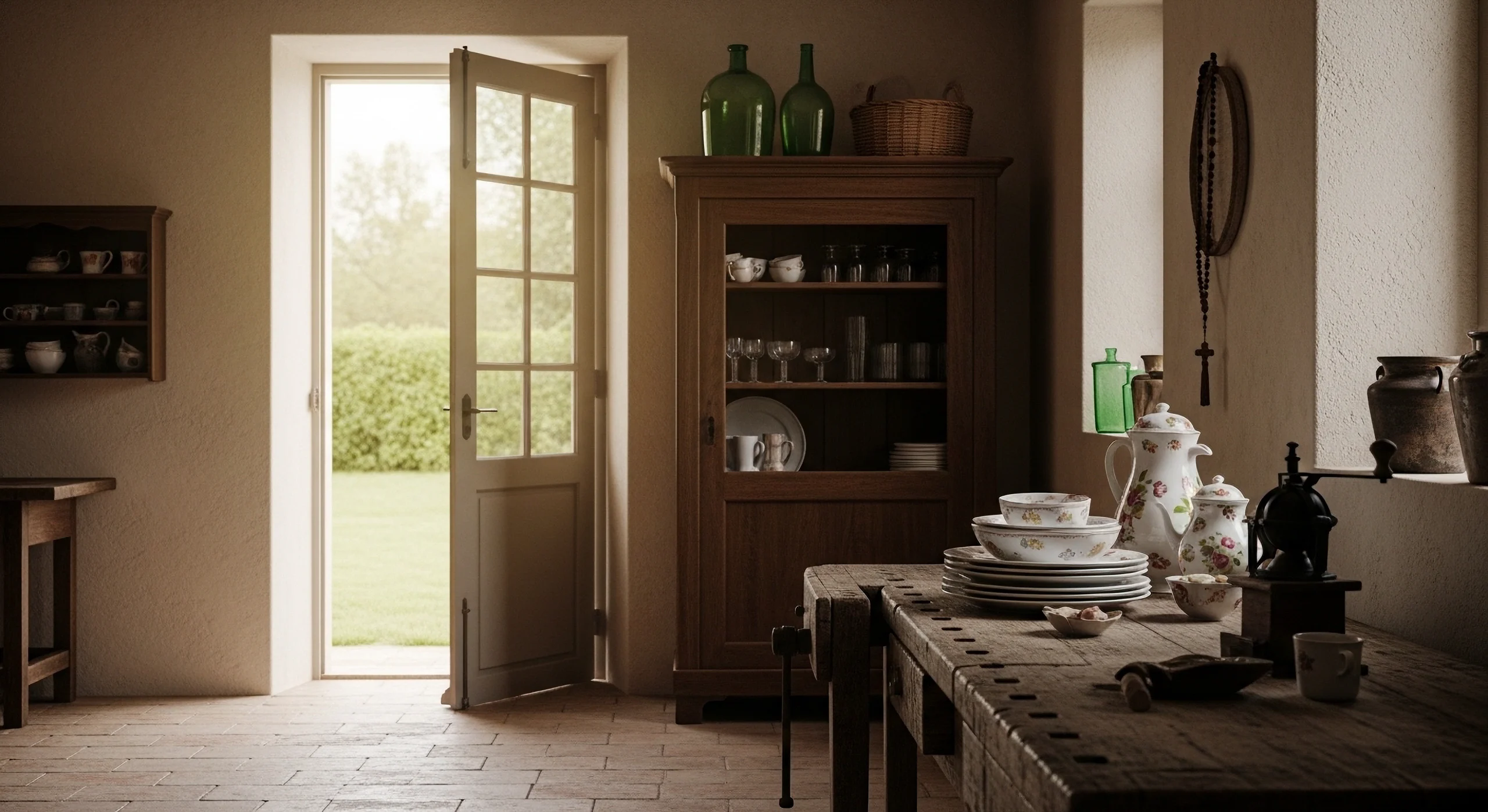
自然言語プロンプト:
A hyper-realistic, ultra-high-definition (8K) wide-angle interior photograph of a traditional French farmhouse kitchen, composed as a high-end interior magazine feature shot by a professional architectural photographer.

Camera positioned at human eye-level (approx. 150cm), slightly offset from center, using a wide-angle lens that preserves natural proportions (no distortion). Strong sense of depth created by foreground–midground–background layering, with clean leading lines guiding the viewer’s eye toward the sunlit door.

Foreground: a worn farmhouse worktable in dark aged wood (#5A4632), partially cropped at the bottom edge for intimacy and realism. Table surface sharply in focus, showing fine grain, scratches, and patina. On the table, carefully styled stacks of Limoges and Sèvres porcelain (#F8F8F6) with delicate floral details, arranged asymmetrically for editorial balance, alongside a vintage manual coffee grinder in dark wood (#3B2E23) and burnished metal (#7A6A58).

Midground: tall dark wooden cupboard (#3E2F24) placed slightly off-axis to avoid symmetry. Open shelving reveals glassware and ceramics with subtle reflections. On top, a green glass jar (#3F6B57) and woven basket (#B89D6A) create vertical rhythm. A wooden rosary (#5C4A3A) hangs naturally, adding cultural storytelling detail.

Background: a half-open door painted CACHEMIRE (#C6C1B6) with a CREMEUX (#EFE6D8) frame acts as the primary light source and visual anchor. Volumetric sunlight (5200K) enters diagonally, illuminating dust particles and creating soft highlights on textures. Beyond the door, a sunlit garden in natural green (#4F7F4A) provides color contrast and depth.

Walls finished in aged plaster CREME ANCIEN (#F3EFE6), photographed to emphasize texture through side lighting. Floor of weathered terracotta tiles GRIS CLAIR (#B5B5B0) leads perspective lines toward the door. Ceiling beams in deep patinated wood (#4A3A2A) frame the upper composition.

Lighting is a refined blend of natural sunlight and warm ambient lamp light (2800K). A table lamp with Quimper pottery base (blue #2F6F8F, cream #F2E6D8) and a checkered lampshade in BEIGE ROSE (#D6B6B1), CREVETTE (#E3A39C), and white (#FFFFFF) adds a soft editorial glow.

A modern stainless steel refrigerator (#C9CACC) is placed deep in the background, intentionally understated, adding contemporary contrast without dominating the frame. Two small dark wooden stools (#3A2C22) rest quietly against the wall.

Photographed with magazine-style restraint: no clutter, no exaggeration, no fantasy. Natural color grading, strict HEX color fidelity, realistic contrast curve, subtle vignette. Calm, elegant, timeless French rural atmosphere suitable for luxury interior and lifestyle publications.
JSON + HEXコード
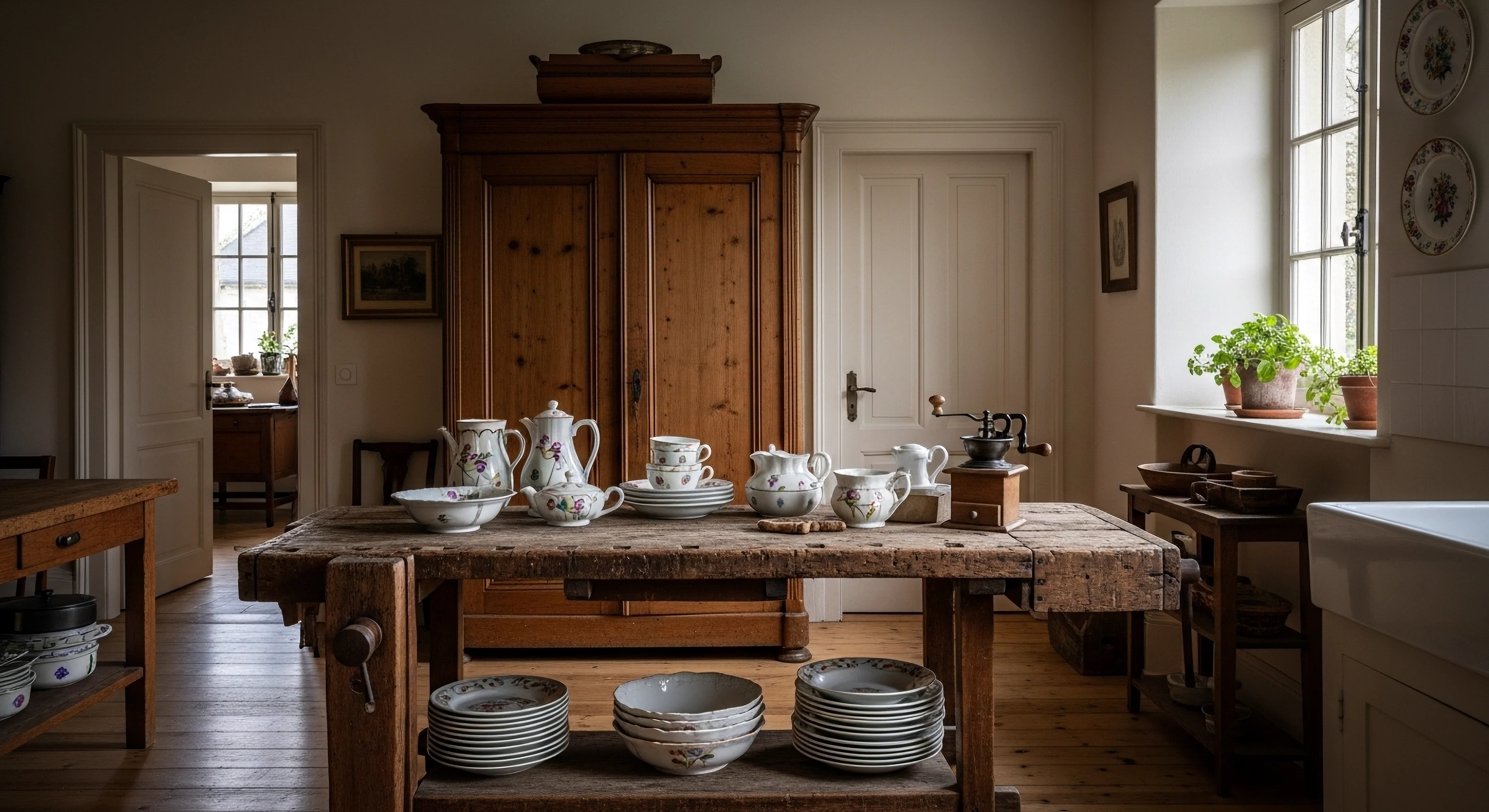
JSONプロンプト:
{
  "meta": {
    "type": "AI Image Generation Prompt",
    "style": "High-end interior magazine photography",
    "resolution": "8K",
    "realism": "Hyper-realistic",
    "theme": "Traditional French farmhouse kitchen"
  },
  "camera": {
    "position": {
      "heightCm": 150,
      "offset": "slightly off-center"
    },
    "lens": {
      "type": "wide-angle",
      "distortion": "none",
      "naturalProportions": true
    },
    "perspective": {
      "depthStructure": [
        "foreground",
        "midground",
        "background"
      ],
      "leadingLines": "guide eye toward sunlit door"
    }
  },
  "composition": {
    "foreground": {
      "primaryObject": {
        "type": "farmhouse worktable",
        "material": "aged wood",
        "colorHex": "#5A4632",
        "cropping": "partially cropped at bottom edge",
        "surfaceDetail": [
          "fine wood grain",
          "scratches",
          "deep patina"
        ]
      },
      "tabletopObjects": [
        {
          "type": "porcelain plates and dishes",
          "origin": [
            "Limoges",
            "Sèvres"
          ],
          "colorHex": "#F8F8F6",
          "details": "delicate floral patterns",
          "arrangement": "asymmetrical editorial styling"
        },
        {
          "type": "manual coffee grinder",
          "style": "vintage",
          "materials": {
            "woodHex": "#3B2E23",
            "metalHex": "#7A6A58"
          }
        }
      ]
    },
    "midground": {
      "furniture": {
        "type": "tall wooden cupboard",
        "colorHex": "#3E2F24",
        "placement": "slightly off-axis",
        "shelving": {
          "style": "open",
          "contents": [
            "glassware",
            "ceramics"
          ],
          "visualEffect": "subtle reflections"
        }
      },
      "topDecor": [
        {
          "object": "glass jar",
          "colorHex": "#3F6B57"
        },
        {
          "object": "woven basket",
          "colorHex": "#B89D6A"
        }
      ],
      "culturalDetail": {
        "object": "wooden rosary",
        "colorHex": "#5C4A3A",
        "placement": "hanging naturally"
      }
    },
    "background": {
      "architecturalAnchor": {
        "object": "half-open door",
        "colors": {
          "doorHex": "#C6C1B6",
          "frameHex": "#EFE6D8"
        },
        "role": "primary light source and visual anchor"
      },
      "lightingEffect": {
        "type": "volumetric sunlight",
        "colorTemperatureK": 5200,
        "direction": "diagonal",
        "effects": [
          "illuminated dust particles",
          "soft texture highlights"
        ]
      },
      "exteriorView": {
        "scene": "garden",
        "colorHex": "#4F7F4A",
        "effect": "depth and color contrast"
      }
    }
  },
  "architectureAndSurfaces": {
    "walls": {
      "material": "aged plaster",
      "traditionalColorName": "CREME ANCIEN",
      "colorHex": "#F3EFE6",
      "lightingTechnique": "side-lit to emphasize texture"
    },
    "floor": {
      "material": "weathered terracotta tiles",
      "traditionalColorName": "GRIS CLAIR",
      "colorHex": "#B5B5B0",
      "visualRole": "leading perspective toward door"
    },
    "ceiling": {
      "structure": "exposed beams",
      "material": "deep patinated wood",
      "colorHex": "#4A3A2A",
      "compositionRole": "frames upper image area"
    }
  },
  "lighting": {
    "natural": {
      "source": "sunlight",
      "temperatureK": 5200,
      "quality": "soft yet directional"
    },
    "artificial": {
      "source": "table lamp",
      "temperatureK": 2800,
      "lampDetails": {
        "base": {
          "type": "Quimper pottery",
          "colors": {
            "blueHex": "#2F6F8F",
            "creamHex": "#F2E6D8"
          }
        },
        "lampshade": {
          "pattern": "checkered",
          "colors": [
            {
              "name": "BEIGE ROSE",
              "hex": "#D6B6B1"
            },
            {
              "name": "CREVETTE",
              "hex": "#E3A39C"
            },
            {
              "name": "WHITE",
              "hex": "#FFFFFF"
            }
          ]
        }
      }
    }
  },
  "additionalElements": {
    "appliances": {
      "type": "refrigerator",
      "material": "stainless steel",
      "colorHex": "#C9CACC",
      "placement": "deep background",
      "visualPriority": "intentionally understated"
    },
    "furniture": [
      {
        "type": "stool",
        "count": 2,
        "material": "dark wood",
        "colorHex": "#3A2C22",
        "placement": "against wall"
      }
    ]
  },
  "postProcessing": {
    "colorGrading": "natural",
    "hexFidelity": "strict",
    "contrastCurve": "realistic",
    "vignette": "subtle",
    "restrictions": [
      "no clutter",
      "no exaggeration",
      "no fantasy elements"
    ]
  },
  "overallMood": {
    "atmosphere": "calm, elegant, timeless",
    "culturalTone": "French rural heritage",
    "publicationFit": [
      "luxury interior magazines",
      "lifestyle editorials"
    ]
  }
}
まとめと今後の課題
全体として、この考え方はメリットがデメリットを上回るポテンシャルがあると考えています。特に私に限って言えばAI生成の「次のステージ」として有効だと位置付けています。
可能性を広げる観点では、映像素材で特に革新性があり、将来的にメタバースやVRコンテンツの基盤になるかも知れないと予測しています。
デメリットを最小化するためには、ツールの選択(例: 私の日常的使用の範囲内で言えばNano Banana Pro、Flux 2.0 Proなど)HEX対応の強いモデルを使うか、さらなる学習を通して自動化スクリプトの導入を検討すべきだと考えています。
投稿者プロフィール
- こんにちは、AKIRA Obataです。私はAI技術を活用して、独自のデジタルアートを創作するアーティストです。テクノロジーとクリエイティビティの交差点で、新しい表現の可能性を探求しています。『aigenart』は、私の作品やアイデアを世界に発信する場であり、AIがもたらす美しさや楽しさを皆さんと共有したいと考えています。
最新の投稿
 JSON2026-03-17Nano Banana Proで使うJSON + PBR – 徹底解説
 JSON2026-03-11最新の画像生成AIのパフォーマンスを生かすために
 Prompt2026-03-09画像生成の完成度を高めるためのカラーコード変換ツール – その使い方
 Tools2026-03-08イタリア伝統色 全200色 選択ツール